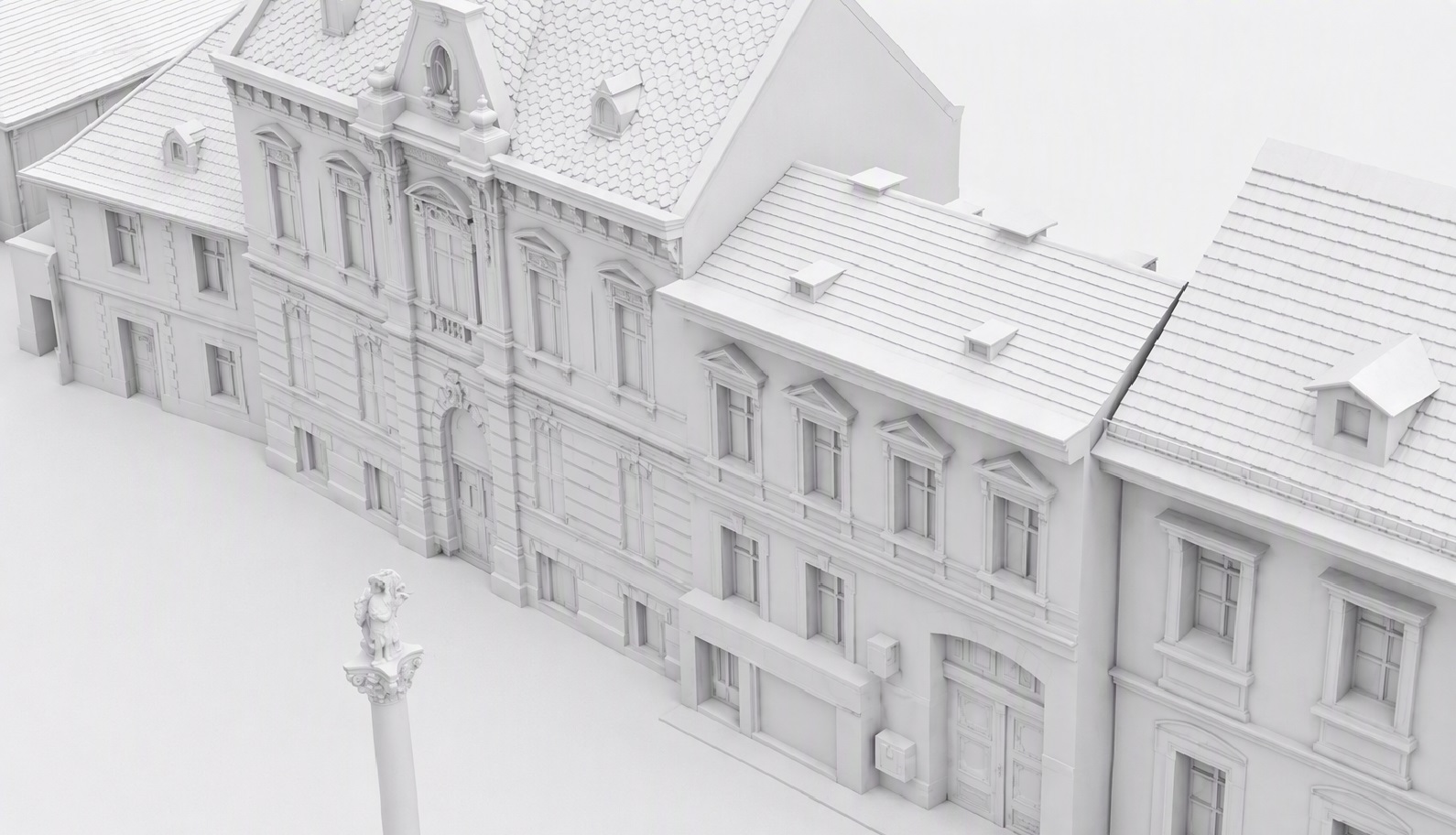
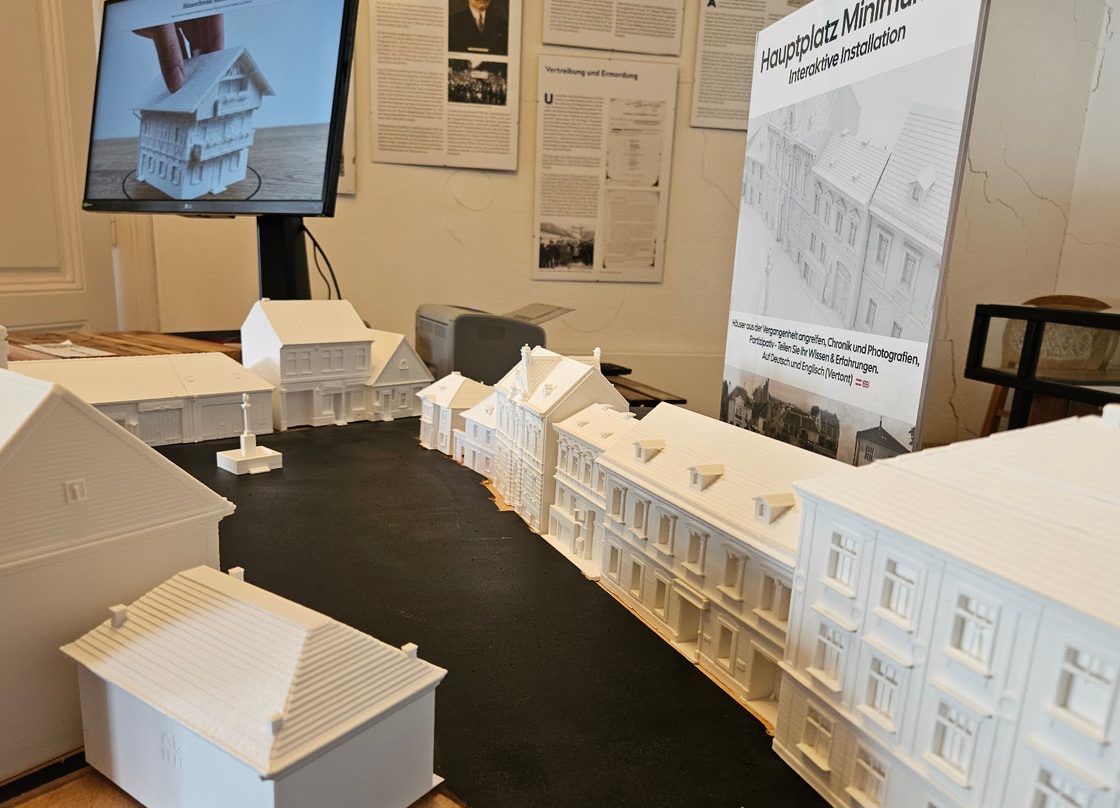
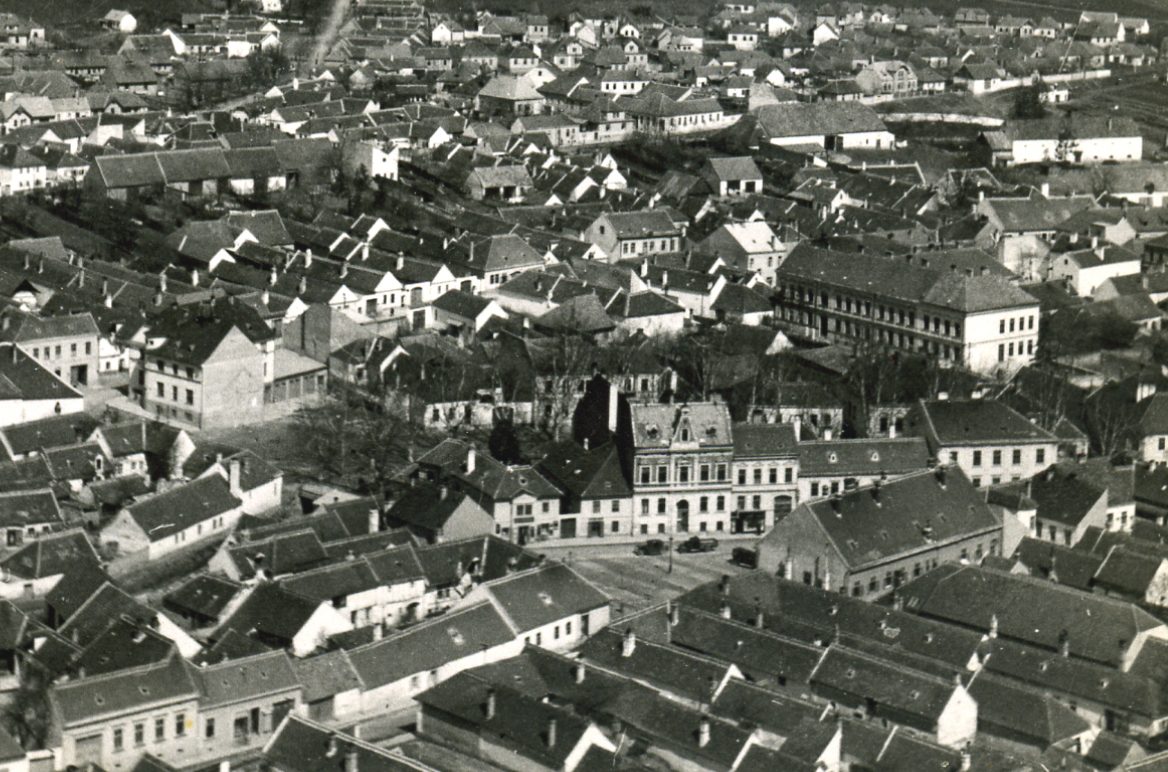
Put a house on the reading plate and the display tells its story: historical photographs, the house chronicle, who lived and worked there — to read or to listen to, in German and English. It also works without the display: scan the house’s QR code with your own phone, no app needed.
Why the Hauptplatz
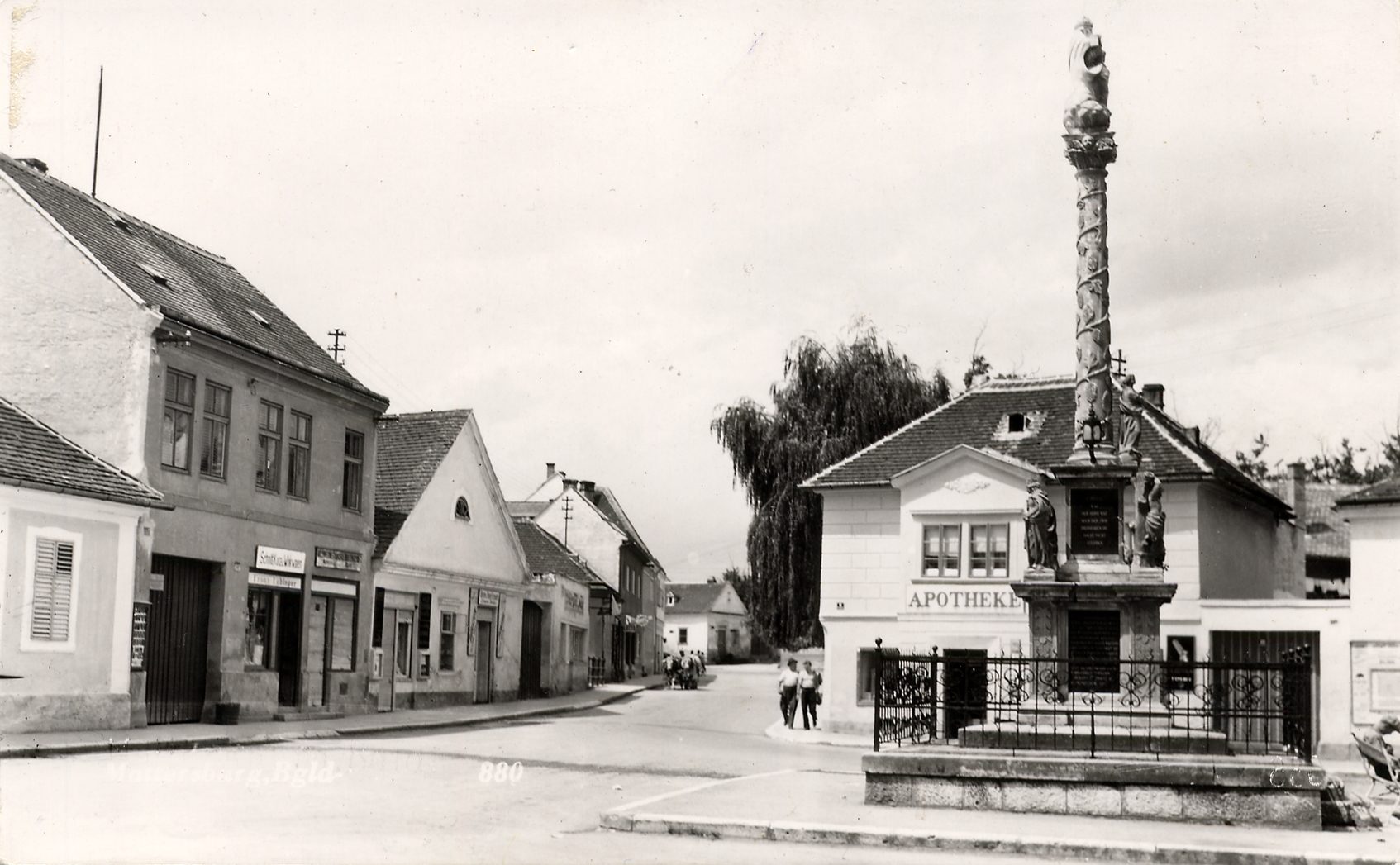
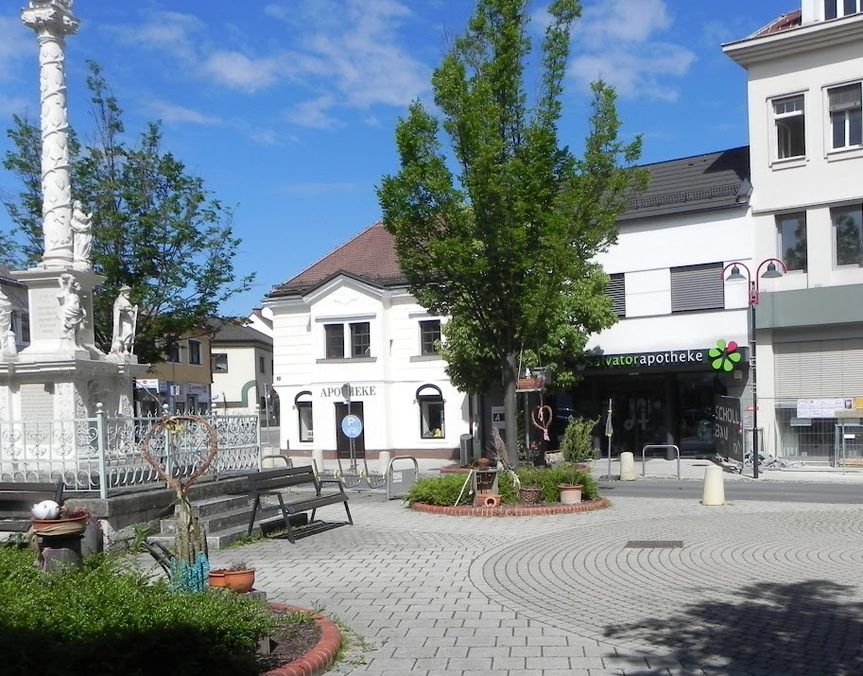
Around 1930 the square was the stage of the young town: the savings bank, the pharmacy, the hotel, shops and inns, the surgery of Dr. Richard Berczeller. Hardly any place in Mattersburg has changed as much since. Many of the façades have been rebuilt, raised by a storey, or are gone. Crossing the square today, you see only traces.
A shared memory
The houses were homes, shops and workshops, and the people who went in and out of them know things no archive holds — what the bakery looked like, who lived on the first floor. The model collects those memories, so the town tells its own story and the chronicle grows with every contribution.
Status
A prototype, built from our own resources to show what a tactile model, source work and digital content can do together. Grant applications for more of the town, more buildings, deeper content and a permanent installation are under way.
Team
A project of the 70er Haus der Geschichten. Historical research by Dr. Georg Luif (my father), Wolfgang Steiger, Anna Benedek and the Geschichtenhaus historians. I did the 3D modelling and the technical implementation. The authors of the historical photographs are still being identified.
mattersburg.haus