Custom Tracking System – Vive VR

I built a custom tracker around the lighthouse base stations of my old HTC Vive. The goal: track small robots indoors for about $10–15 per unit.

2026 Soldering Table

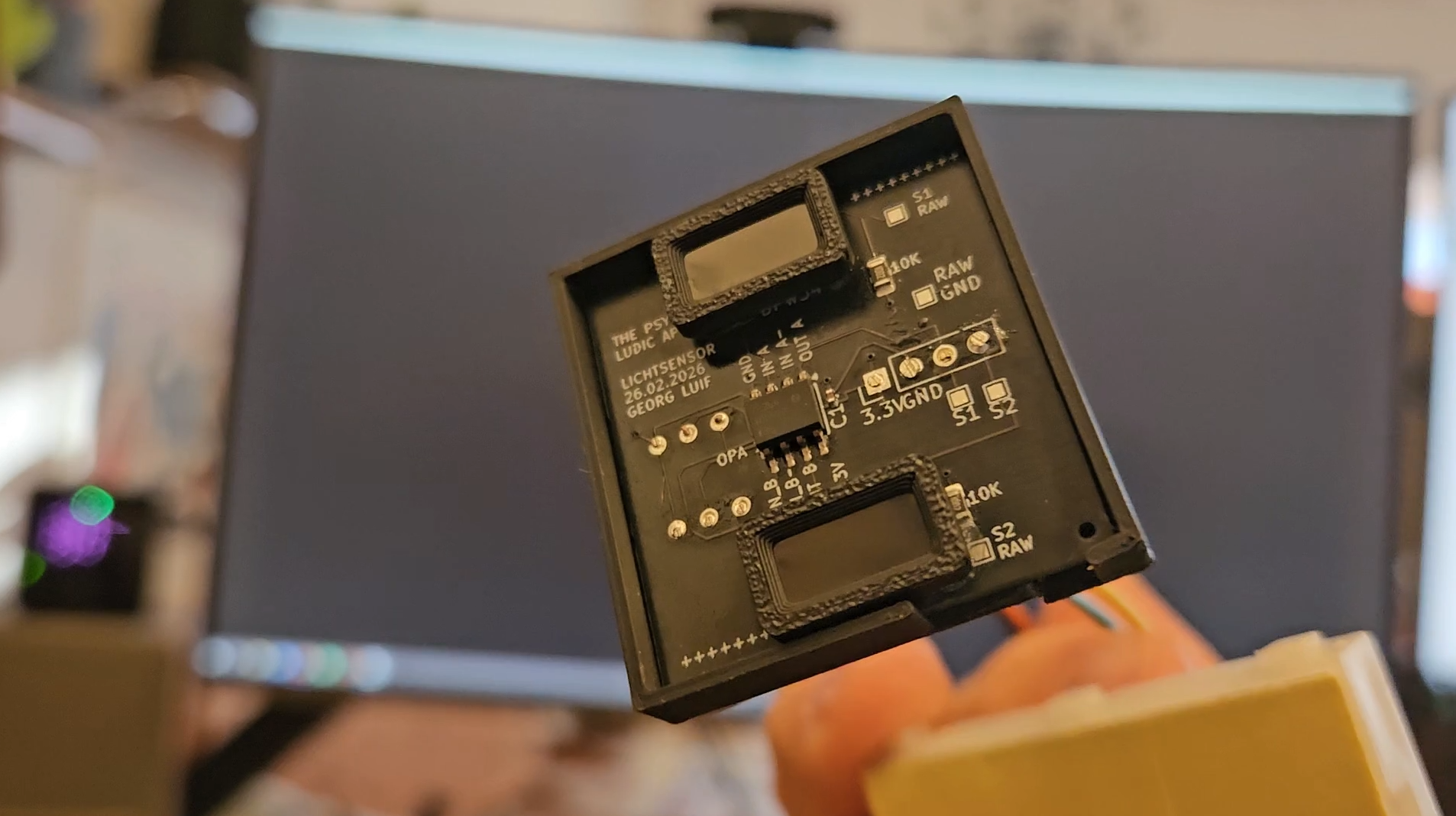
A hand holds a small black custom PCB with two chips in front of a computer monitor.

For that I made a custom PCB in the simplest way possible, as a beginner in electronics. It uses BPW-34 photodiodes, which have no IR filter built in, so floppy-disk film serves as a cheap IR bandpass, and it works surprisingly well.

Even that basic board picked up the pulses from the lighthouses: X and Y position and some rotation, from just two diodes.

The next board had three sensors. It was a bit unreliable, but in principle it worked. A great experiment, and I learned a lot from it.

From the log

First positions out of the lighthouse tracker

The custom Vive-lighthouse tracker returns its first usable data: X, Y, and a bit of rotation, captured with two BPW-34 photodiodes on a home-made PCB. Floppy-disk film works surprisingly well as a cheap IR bandpass filter.

Two diodes is barely enough, but the target — indoor tracking for small robots at ten to fifteen euros a unit — still looks reachable. The next board gets at least three sensors.
A hand holds a small black custom PCB with two chips in front of a computer monitor.

How it was made